
처음이신가요?
뉴스레터를 구독하시면 신상품, 특별 프로모션, 온라인 독점 혜택에 대한 소식을 가장 먼저 받아보실 수 있습니다.
In today’s fast-paced world, health has become more than just a priority — it’s a daily practice. From optimizing sleep and improving fitness to managing stress, people are searching for ways to understand and take control of their well-being. Smartwatches have emerged as powerful companions in this journey. Once seen mainly as step counters or notification devices, modern wearables now offer sophisticated sleep tracking, heart monitoring, and stress management features.
For those considering whether a smartwatch can truly make a difference in health, the short answer is yes — if you know how to use its insights. In this guide, we’ll break down how smartwatches improve sleep quality, heart health, and stress resilience, while offering practical tips you can apply every day.
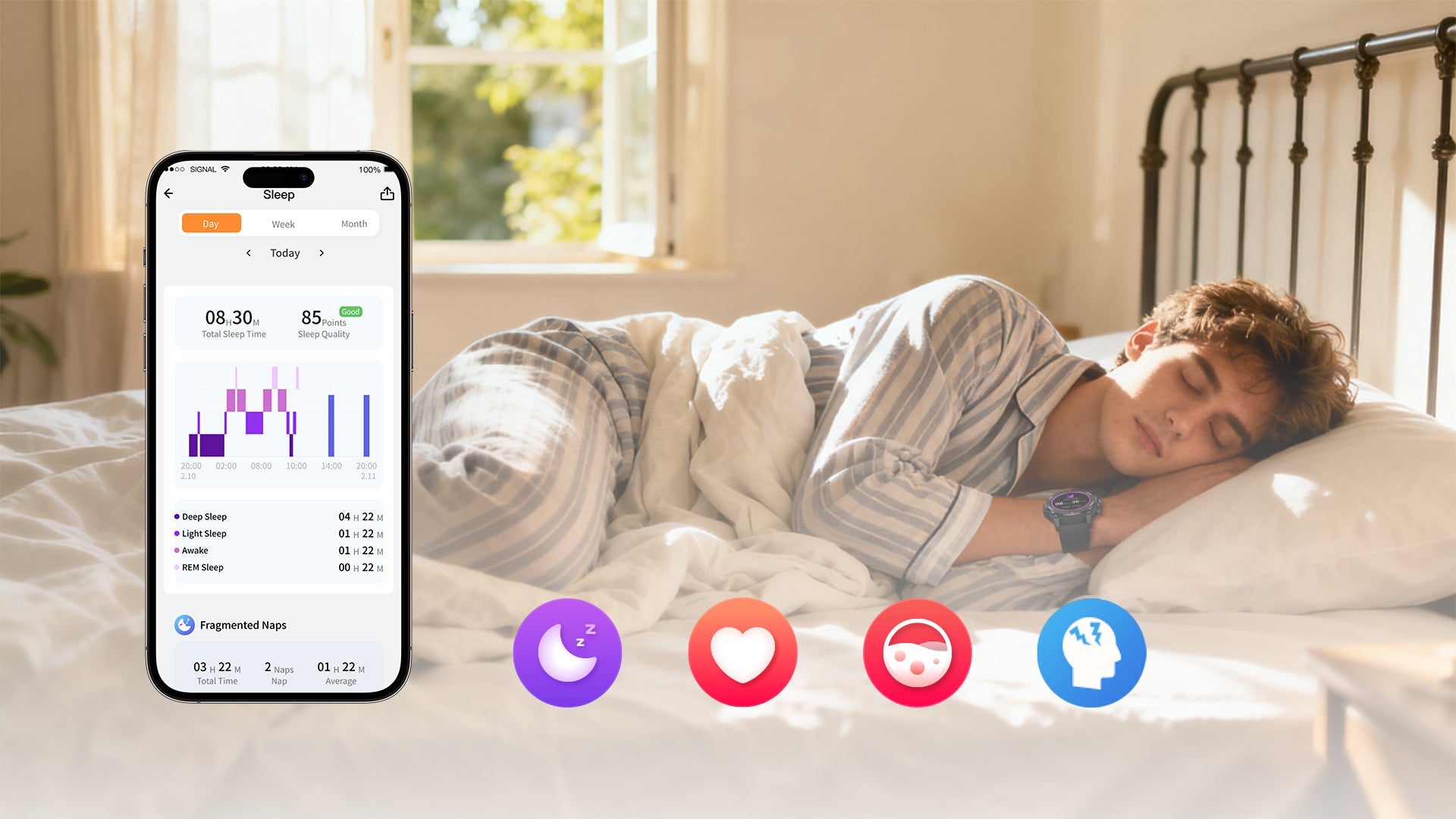
Most advanced smartwatches, including the AuraFit Trek 1, can track your sleep automatically using a combination of motion sensors and optical heart rate monitoring. The data is then analyzed to estimate time spent in:
Light sleep – This is the transitional period between wakefulness and sleep. Your body is winding down, and even brief awakenings (which you might not remember) are normal.
Deep sleep – This is the most physically restorative phase. Tissue repair, muscle growth, and immune system strengthening occur here. It’s hardest to be woken from deep sleep, and if you are, you’ll likely feel disoriented.
REM sleep – This is where most dreaming occurs. Your brain is highly active, almost as if you're awake, and it's critical for cognitive functions like learning, memory consolidation, and mood regulation.
By showing when and how long you spend in each stage, a smartwatch provides a clear picture of your sleep architecture.
Poor sleep is linked to reduced productivity, mood swings, and long-term health risks such as obesity and cardiovascular disease. Knowing your sleep patterns allows you to adjust habits and optimize rest.
Check consistency: Aim for the same bedtime and wake-up schedule, even on weekends.
Spot disruptions: If your watch shows frequent wake-ups, review late caffeine use or screen exposure.
Improve recovery: Use sleep insights to identify how late-night workouts or alcohol affect your sleep stages.
Naps strategically: Smartwatch tracking can help confirm whether short power naps help you or interfere with nighttime sleep.
AuraFit’s smartwatch sleep tracking provides daily summaries with actionable suggestions, helping you turn raw data into real improvements.
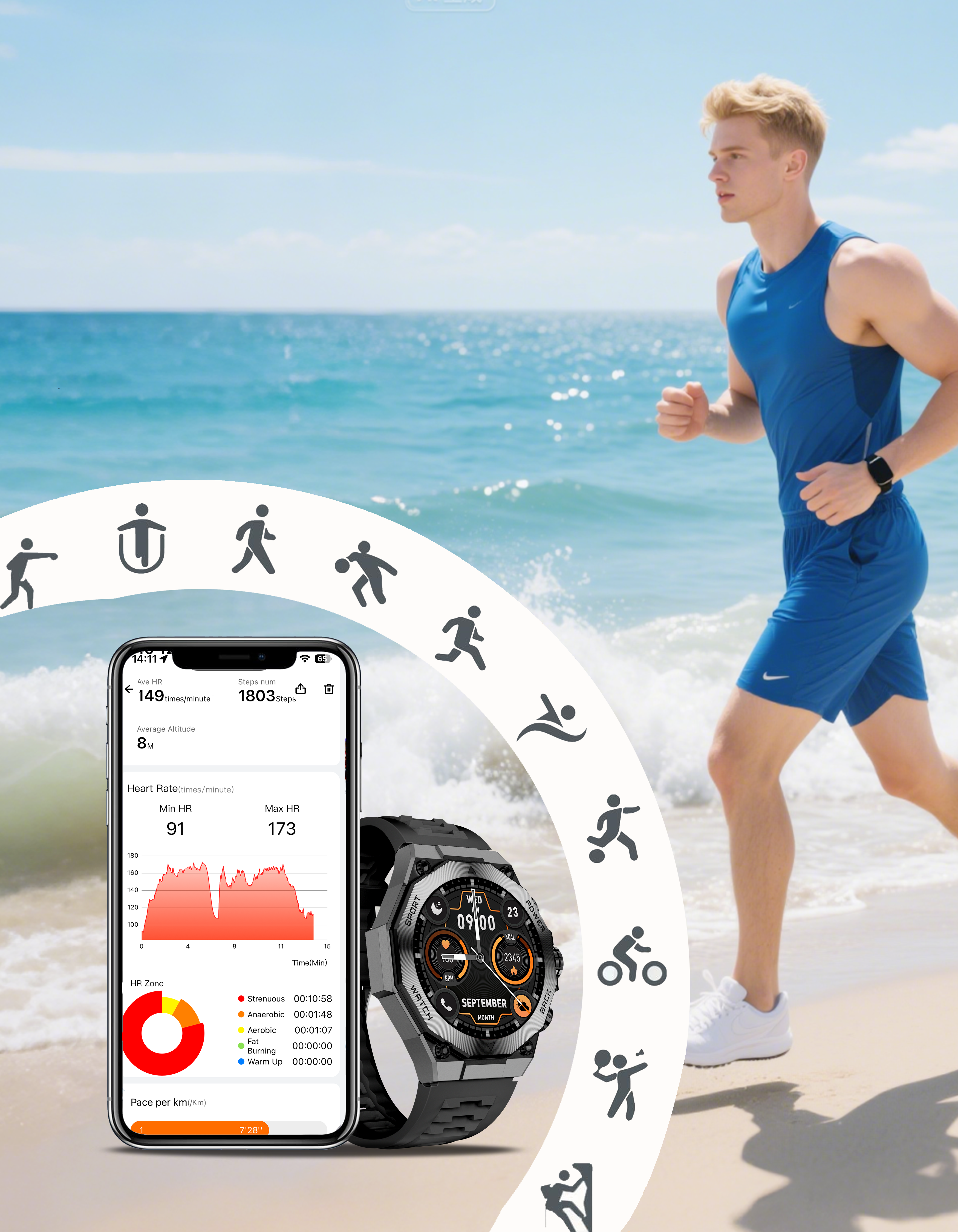
Monitoring heart rate (HR) has long been a cornerstone of fitness. A smartwatch constantly measures your beats per minute, letting you see whether your heart is working too hard — or not enough.
Resting Heart Rate (RHR): A lower RHR generally indicates better cardiovascular health.
Exercise Heart Rate Zones: Training within specific HR zones helps maximize fat burn, endurance, or speed.
Beyond simple beats per minute, Heart Rate Variability (HRV) — the variation in time between each heartbeat — is gaining attention. Higher HRV is linked to better recovery, lower stress, and stronger adaptability. Smartwatches that track HRV provide insights into your body’s readiness for physical or mental challenges.
Modern wearables calculate training load by combining HR and HRV data with activity tracking. This helps prevent overtraining — a common problem for athletes who push too hard without adequate recovery.
AuraFit integrates real-time heart rate tracking and HRV monitoring to provide clear, beginner-friendly insights into cardiovascular health.
Your nervous system has two main gears: the sympathetic ("fight or flight") and the parasympathetic ("rest and digest"). Chronic stress keeps you stuck in "fight or flight," which can wreak havoc on your long-term health.
Stress manifests physically through changes in HRV and skin response. Many smartwatches now combine these metrics with activity data to estimate your stress level throughout the day. Instead of waiting until you feel overwhelmed, you can see early signals and act before stress builds.
Smartwatches don’t just identify stress — they guide you through coping strategies. Breathing exercises are a common feature, often lasting 1–3 minutes, where haptic feedback and visual prompts help you slow down and reset.
Micro-breaks at work: Use stress alerts as reminders to take a quick breathing session between meetings.
Pre-sleep routine: A relaxation exercise guided by your watch can reduce cortisol levels and improve sleep quality.
Workout cooldowns: Incorporating guided breathing helps bring your nervous system back to balance after intense exercise.
With AuraFit’s stress management tools, users get personalized breathing sessions and continuous monitoring to support both mental and physical resilience.
For all this to be valuable, you need to trust both the data and the company behind it.
With so much sensitive data being tracked — from heart rate to sleep cycles — privacy is crucial. Trusted smartwatch brands allow you to:
Store data locally or in encrypted cloud services.
Control what health data apps can access.
Delete your information at any time.
When choosing a smartwatch, always check the brand’s privacy policy. AuraFit emphasizes user-first security, ensuring your data stays private and under your control.
Smartwatch sensors need proper calibration for reliable readings. Some best practices include:
Wearing fit: Keep the watch snug but comfortable, especially during exercise.
Manual Calibration: For features like GPS distance, manually calibrating your stride length or doing a tracked outdoor run can improve future distance and pace estimates.
Regular updates: Install firmware updates to benefit from improved algorithms.
By following calibration basics, you maximize the accuracy of health data — ensuring the insights you act on are trustworthy.
Smartwatches provide valuable health information, but they are not medical devices. They can guide you, but they cannot diagnose or treat conditions.
Situations when you should consult a professional include:
Persistent sleep issues despite improving habits.
Unusually high or low heart rate readings.
Chronic stress symptoms affecting daily life.
Concerns about chest pain, dizziness, or shortness of breath.
Think of a smartwatch as a first layer of awareness — a tool that helps you know when it’s time to seek expert advice. AuraFit actively reminds users that data insights are wellness aids, not substitutes for clinical care.
Among the many wearables available today, AuraFit stands out for its balance of accuracy, usability, and affordability. Whether you’re tracking sleep cycles, heart rate variability, or stress levels, AuraFit devices combine reliable hardware with intuitive software.
Smartwatch sleep tracking: Detailed insights into sleep stages and recovery.
Continuous HR & HRV: Real-time monitoring to optimize workouts and rest.
Stress tools: Guided breathing exercises to support mental balance.
Privacy controls: User-first security with encrypted data handling.
Durability: AuraFit Trek 1, for example, combines these features with rugged outdoor capability, making it ideal for both daily wellness and adventurous lifestyles.
For those looking for smartwatch health benefits without paying a premium price, AuraFit delivers professional-grade features at an accessible cost.
Smartwatches have evolved into far more than digital watches or step trackers. They are now comprehensive wellness tools that help you understand your body, improve your routines, and maintain balance in a hectic world.
By offering insights into sleep stages, heart health, and stress management, smartwatches like AuraFit empower you to make small daily changes that add up to long-term health improvements. Add in practical tips, privacy protections, and reminders to seek professional advice when necessary, and you have a device that truly enhances modern living.
For anyone asking whether investing in a smartwatch is worth it, the answer is clear: if you value better sleep, a stronger heart, and a calmer mind, a smartwatch — especially one from AuraFit — is one of the smartest choices you can make in 2025.
✅ 간단히 말해서:
IP68 등급은 국제전기기술위원회(IEC)에서 정의한 표준 방수 방진 등급입니다. 그 의미는 다음과 같습니다.
그러나 IP68은 실험실 조건에서 테스트됨 고요하고 깨끗한 물을 사용합니다. 수압, 움직임, 온도, 오염 물질과 같은 실제 요인(e.g., 소금이나 비누)는 성능에 영향을 미칠 수 있습니다. 예를 들어:
IP68은 견고하지만 모든 극한 상황을 포괄하지는 못할 수 있습니다.
귀하의 요구 사항에 따라:
IP68은 하이킹과 폭우에 충분함먼지, 비, 그리고 우발적인 침수로부터 보호해 줍니다. 하지만 수영, 다이빙 또는 고압 수중 노출과 같은 활동을 하는 경우, 5ATM 이상 등급. 수명을 보장하려면 항상 제조업체의 지침을 확인하세요.
✅ 경험 법칙:
견고한 스마트워치는 편안하게 지속되어야 합니다. 충전당 최소 1~2주 일반적인 사용에서는 GPS 모드에서 여러 날. 그보다 더 작은 것은 위장한 "일반" 스마트워치에 더 가깝습니다.
👉 정장에 착용한다면 일반 스마트워치나 하이브리드 시계가 더 세련되어 보일 수 있습니다. 하지만 캐주얼/스포티한 스타일에는 견고한 시계가 점점 더 다양하게 활용되고 있습니다.
👉 대부분의 견고한 스마트워치는 이제 편안할 만큼 편안합니다. 하루 종일 착용 가능하지만 손목이 얇다면 일반 얇고 가벼운 스마트워치에 비해 크기가 크다는 걸 느낄 수도 있습니다.

공유하다:
Waterproof Smartwatch for Swimming and Fitness Tracking
Smartwatches for Work and Social Life – Style Meets Function